As an Amazon Associate, we earn from qualifying purchases. Some links may be affiliate links at no extra cost to you. Although our opinions are based on curated research, we haven't used these products. Articles generated with AI.


The 3 Best Ethernet Switch Hubs of 2026: Unmatched Performance and Reliability

If you’re looking for the best Ethernet switch hubs of 2026, check out the NETGEAR GS305, the TP-Link Litewave LS1005G, and the TP-Link TL-SG105. Each offers five ports and great gigabit speed, perfect for small offices or home setups. The GS305 impresses with its durable metal casing, while the LS1005G is super energy-efficient. Finally, the TL-SG105 stands out with solid performance. Want to know more about what makes these switches ideal? Keep reading!
Key Takeaways
- The NETGEAR GS305 is recognized for its durable metal casing and silent operation, ideal for home and small office use.
- TP-Link Litewave LS1005G offers excellent energy efficiency with a quick plug-and-play setup, perfect for budget-conscious users.
- The TP-Link TL-SG105 delivers high-speed performance and energy efficiency, catering to high-demand applications with robust metal construction.
- Consider future scalability and port counts; these models are limited to five ports, suitable for small to medium setups.
- Customer support and warranty options are crucial for long-term reliability; look for models offering at least a 3-year warranty.
NETGEAR 5-Port Gigabit Ethernet Unmanaged Switch (GS305)

NETGEAR 5-Port Gigabit Ethernet Unmanaged Essentials Switch (GS305) - Home Network Hub, Office...
- 5 Gigabit Ethernet ports
- Simple plug-and-play setup with no software to install or configuration needed
- Supports desktop or wall mount placement

If you’re looking for a reliable Ethernet switch that offers a no-fuss installation, the NETGEAR 5-Port Gigabit Ethernet Unmanaged Switch (GS305) is your best bet. It’s perfect for home networks and small offices, boasting five Gigabit Ethernet ports for lightning-fast connections. With its plug-and-play setup, you can get connected in no time—no software required! Plus, its rugged metal case allows for silent operation, making it ideal for noise-sensitive spaces (yes, you can finally work in peace!). You can place it on your desk or mount it on the wall. Overall, it delivers great performance backed by a solid warranty.
Best For: Home users and small office environments seeking an easy-to-install and reliable networking solution.
Pros:
- Easy installation with plug-and-play setup; no software required.
- Silent operation due to fan-less design, suitable for noise-sensitive areas.
- Durable metal casing ensures longevity and robustness in various settings.
Cons:
- Unmanaged switch means no advanced features like VLANs or QoS.
- Limited to five ports, which may not be sufficient for larger networks.
- No advanced security features, potentially making it less suitable for enterprise-level applications.
TP-Link Litewave 5 Port Gigabit Ethernet Switch (LS1005G)
Sale


TP-Link Litewave 5 Port Gigabit Ethernet Switch | Desktop Ethernet Splitter | Unshielded Network...
- 【One Switch Made to Expand Network】Features 5 RJ45 ports with 10/100/1000Mbps speeds, supporting Auto-Negotiation and Auto MDI/MDIX for hassle-free setup. Ideal for...
- 【Gigabit that Saves Energy】Latest innovative energy-efficient technology greatly expands your network capacity with much less power consumption and helps save money
- 【Reliable and Quiet】IEEE 802.3X flow control provides reliable data transfer and Fanless design ensures quiet operation
Looking to expand your wired network without breaking the bank? The TP-Link Litewave 5 Port Gigabit Ethernet Switch (LS1005G) offers a fantastic solution. With five RJ45 ports delivering speeds up to 1000Mbps, it’s perfect for connecting laptops, gaming consoles, or printers. This unmanaged switch needs no setup—just plug and play, making it incredibly user-friendly. It’s designed for quiet operation thanks to its fanless construction, and its energy-efficient tech cuts power costs. Plus, the compact dimensions (3.54L x 2.83W x 0.91H inches) mean you can tuck it away neatly. Give your network the boost it deserves!
Best For: Home users, small businesses, and schools looking to easily expand their wired network with a reliable and cost-effective solution.
Pros:
- Plug-and-play functionality makes setup quick and easy without any need for software installation.
- Fanless design ensures silent operation, suitable for noise-sensitive environments.
- Energy-efficient technology helps reduce power consumption, saving on electricity costs.
Cons:
- As an unmanaged switch, it lacks advanced features like VLAN support and network management options.
- Limited to five ports, which may not be sufficient for larger setups.
- Plastic casing may not provide as much durability as metal alternatives.
TP-Link TL-SG105 5 Port Gigabit Unmanaged Ethernet Switch
Sale

TP-Link TL-SG105, 5 Port Gigabit Unmanaged Ethernet Switch, Network Hub, Ethernet Splitter, Plug...
- 𝗢𝗻𝗲 𝗦𝘄𝗶𝘁𝗰𝗵 𝗠𝗮𝗱𝗲 𝘁𝗼 𝗘𝘅𝗽𝗮𝗻𝗱 𝗡𝗲𝘁𝘄𝗼𝗿𝗸: 5× 10/100/1000Mbps RJ45 Ports supporting Auto...
- 𝗚𝗶𝗴𝗮𝗯𝗶𝘁 𝘁𝗵𝗮𝘁 𝗦𝗮𝘃𝗲𝘀 𝗘𝗻𝗲𝗿𝗴𝘆: Latest innovative energy-efficient technology greatly expands your network...
- 𝗥𝗲𝗹𝗶𝗮𝗯𝗹𝗲 𝗮𝗻𝗱 𝗤𝘂𝗶𝗲𝘁: IEEE 802.3X flow control provides reliable data transfer and Fanless design ensures quiet operation.
For anyone seeking a reliable, no-fuss Ethernet switch, the TP-Link TL-SG105 5 Port Gigabit Unmanaged Ethernet Switch stands out as an excellent choice. With five RJ45 ports, it supports speeds up to 1000 Mbps, making it perfect for high-demand tasks like streaming or gaming. Its energy-efficient design helps to lower power consumption, and the fanless build guarantees quiet operation—ideal for any workspace. You’ll appreciate the durable metal casing, whether you mount it on a wall or set it on your desk. Plus, with a 3-year warranty and solid customer ratings, it’s a dependable option for your network needs.
Best For: Those looking for a straightforward and efficient Ethernet switch for high-speed network needs like streaming or gaming.
Pros:
- High-speed performance: Offers data transfer rates of up to 1000 Mbps for seamless connectivity.
- Energy-efficient design: Reduces power consumption, contributing to lower electricity bills.
- Durable and quiet: Fanless design ensures silent operation, and durable metal casing provides longevity.
Cons:
- Unmanaged switch: Lacks advanced features and configurations that might be necessary for more complex network setups.
- Limited ports: Only five ports may not be sufficient for larger networks or homes with many devices.
- No PoE support: Does not support Power over Ethernet, which may limit the use of certain devices.
Factors to Consider When Choosing an Ethernet Switch Hub
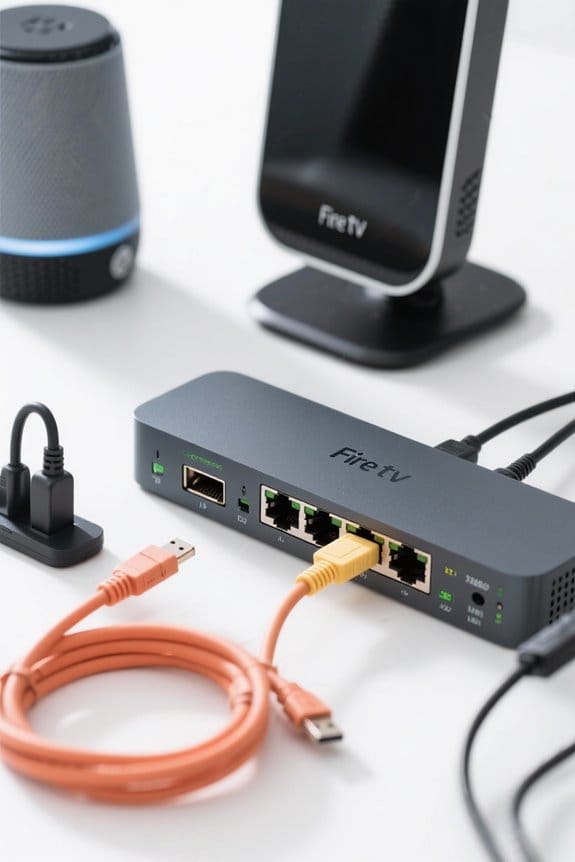
When you’re choosing an Ethernet switch hub, several important factors can really make a difference. You’ll want to evaluate things like the number of ports, speed, performance, and even how energy-efficient the device is. Plus, don’t overlook the size, design, warranty, and customer support, as they can impact your overall experience (no one likes a tangled mess, right?).
Port Count Importance
Choosing the right port count on your Ethernet switch hub can make a big difference in how effectively your network operates. The number of ports determines how many devices you can connect—five ports are great for small offices or homes. Think ahead; a switch with more ports allows for future expansion, making it easier to add devices later. Plus, more ports can boost network performance, reducing bottlenecks by enabling high-speed connections. For instance, a 5-port switch offers speeds up to 1,000 Megabits per second per port, perfect for activities like gaming or streaming. And let’s not forget, selecting the right port count keeps your setup neat by condensing all connections into one device. A tidy network is a happy network!
Speed and Performance
Great port count can enhance your network’s organization, but let’s talk about the speed and performance that make those connections worthwhile. Look for Ethernet switches that support 10/100/1000 Mbps (Gigabit) speeds, essential for high-demand applications. You want a non-blocking switching architecture to avoid bottlenecks, allowing data to flow smoothly across all ports. Features like auto-negotiation help detect the best speed for your devices, optimizing performance effortlessly. Plus, consider switches with Quality of Service (QoS) to prioritize important traffic, especially for voice and video. These elements create a reliable network experience during peak usage times. So, don’t overlook the right specs, as investing in speed will pay off when your network’s performance truly matters!
Power Efficiency Features
Power efficiency features are essential for anyone looking to streamline their Ethernet switch hub without breaking the bank. You’ll want to take into account switches that comply with IEEE802.3az, which cuts power consumption during quiet times. Look for IEEE 802.3X flow control, too; it helps manage data flow while saving energy. A fanless design is another smart choice, keeping noise down and power use lower than traditional fan-equipped models. Plus, switches that automatically adjust speed and duplex settings can enhance efficiency based on your needs. Finally, lightweight and compact designs not only save energy but also lessen environmental impact. These features can greatly help reduce your electricity bills while keeping your network running smoothly.
Size and Design
Size and design play a pivotal role when it comes to picking the right Ethernet switch hub for your setup. You’ll notice that dimensions can vary considerably, with compact models measuring around 3.54L x 2.83W inches, while larger ones might be about 6.2L x 4W inches. This size difference can affect shelf space and placement options. Weight matters, too; lighter switches, at 2.82 ounces, are easier to move than heavier ones, which can be nearly 8.8 ounces. Plus, consider whether you want a desktop or wall-mounted design for better cable management. Choose a robust metal casing for durability, or a lighter plastic design for portability. Fanless models are also a bonus for noise-sensitive environments, keeping things quiet (and peaceful!).
Warranty and Support
When you’re choosing an Ethernet switch hub, don’t overlook the importance of warranty and support—it can really make a difference down the line. Start by considering the length and terms of the warranty; a longer warranty often signals a manufacturer’s confidence in their product. Look for thorough technical support, including various contact methods and availability hours, so you’ll have assistance if issues arise. A hassle-free return or replacement policy is also a plus, especially if the product doesn’t meet your expectations. Check customer reviews about warranty service experiences; they’ll give you insight into the support reliability. Finally, see if the warranty covers power surges, adding protection for your investment (because nobody likes unexpected surprises).
Frequently Asked Questions
Can I Use an Ethernet Switch With Wireless Networks?
Yes, you can definitely use an Ethernet switch with wireless networks! Just connect the switch to your router via an Ethernet cable, and it’ll create more wired connections for your devices. This is great for boosting your internet speed for devices like gaming consoles or smart TVs. Plus, using an Ethernet switch can help reduce wireless congestion, which means smoother streaming (and fewer buffering moments). So, it’s a smart move for any home network!
What Is the Difference Between Managed and Unmanaged Switches?
Managed switches give you control over your network, letting you segment traffic and prioritize data flows. You can configure them for specific needs, which is great for businesses. Unmanaged switches, on the other hand, are plug-and-play; they’re simpler and usually cheaper, making them perfect for home use or small networks. So, if you’re looking for ease, go unmanaged, but if you want control, a managed switch’s your best bet (fancy, right?).
Do Ethernet Switches Require External Power Sources?
Yes, some Ethernet switches require external power sources, while others can run without them. For example, unmanaged switches often use Power over Ethernet (PoE), allowing you to power devices directly through the network cable. On the other hand, managed switches may need an external adapter or a power source, especially if they have more features. So, when you’re choosing, consider whether you want a corded solution or the convenience of PoE (which is pretty handy).
How Many Devices Can I Connect Using an Ethernet Switch?
You can connect anywhere from a couple to over fifty devices using an Ethernet switch, depending on the model you choose. Basic switches often have four to eight ports, while more advanced ones can have 24 or even 48. Just remember, the more devices you connect, the more you’ll need to think about bandwidth. (But don’t worry, most switches handle it like pros!) It’s all about what you need for your network!
Are Ethernet Switches Compatible With All Router Brands?
Yes, Ethernet switches are generally compatible with all router brands. They operate on the same basic standards, like IEEE 802.3 for wired connections. So, whether you’ve got a TP-Link, Netgear, or Linksys router, your Ethernet switch should work just fine. Just make sure you have the right cables and the switch supports the number of devices you want to connect. It’s a simple and efficient way to expand your network (you’ll be the tech hero of your home!).